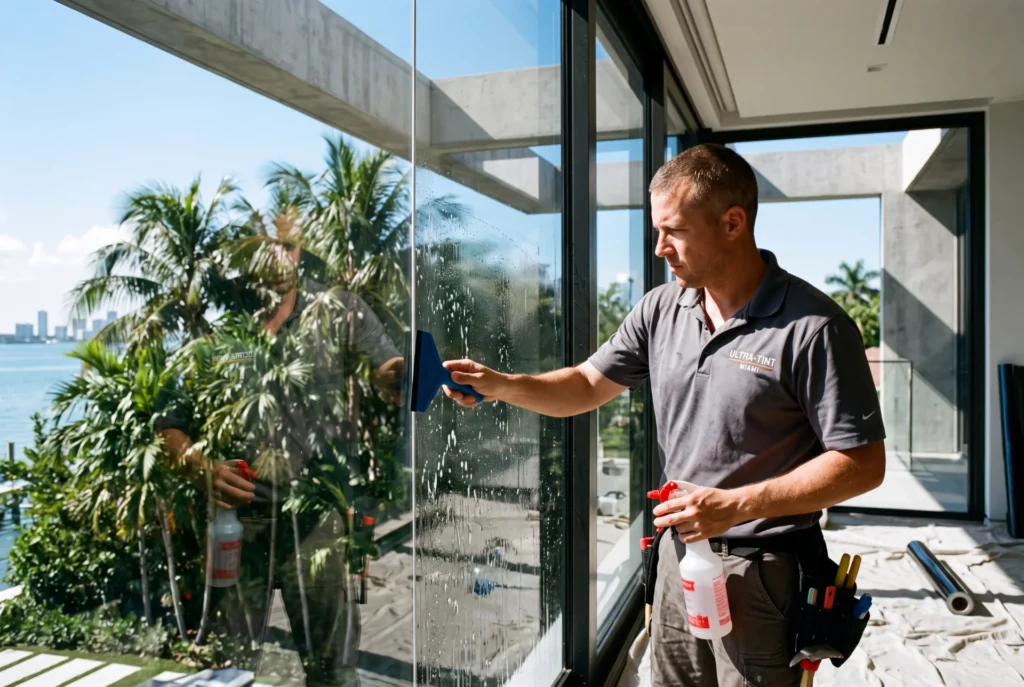
Living in Brickell, Coral Gables, or Kendall comes with world-class sunshine—and unforgiving heat. Standard residential glass quickly turns living rooms into greenhouses, forcing your central air conditioning to run non-stop while driving up electric bills and fading designer furniture. Choosing top-rated residential window tinting miami services is the smart way to block solar heat while preserving natural daylight and pristine skyline views.
At Blackout Window Tinting Miami, we regularly see luxury homes and high-rise condominiums drop indoor ambient temperatures by up to 15°F after installing advanced architectural solar films.
Here is everything homeowners need to know before upgrading their glass.
Why Residential Window Tinting Miami Is Essential for Your Home
Miami averages roughly 249 sunny days per year, with summer UV index levels frequently exceeding 10. That means your exterior glass is subjected to constant thermal bombardment.
Standard architectural glass allows up to 80% of solar heat energy to pass straight into your living space. This heat transfer overburdens your HVAC system, leading to persistent hot spots and costly utility spikes.
Furthermore, raw ultraviolet (UV) radiation is the primary culprit behind bleached hardwood floors, faded rugs, and damaged artwork. Without adequate defense, a sun-drenched, west-facing living room can suffer irreversible sun damage in under two years.
When evaluating residential window tinting miami solutions, homeowners experience immediate daily benefits:
Lower Electric Bills: Reduce summer air conditioning energy consumption by up to 30%.
Immediate Thermal Comfort: Eliminate uncomfortable hot zones near large sliding glass doors and bay windows.
Museum-Grade UV Defense: Safeguard expensive furnishings, custom cabinetry, and hardwood flooring from premature fading.
Enhanced Daytime Privacy: Keep neighbors and street traffic from looking inside while maintaining complete optical clarity looking out.
Reduced Eye Strain: Enjoy glare-free television and computer screens—essential for remote professionals working from home.
Extended HVAC Lifespan: Your air conditioning compressor runs less frequently, minimizing wear and extending equipment life.
Film Types: Selecting the Right Technology for Your Home
Not all solar films perform equally under Florida’s extreme sun. While budget dyed films degrade quickly, architectural nano-ceramic film remains the premier choice for luxury residences:
| Film Technology | Heat Rejection | UV Block | Best Application | Expected Lifespan |
| Nano-Ceramic | Up to 79% | 99% | Living rooms, sliding doors, home offices | 15 to 20+ Years |
| Dual-Reflective / Metallic | Up to 70% | 99% | Windows facing intense direct afternoon sun | 10 to 15 Years |
| Carbon / Hybrid | Up to 60% | 99% | Budget-conscious projects needing reliable heat control | 8 to 12 Years |
| Spectrally Selective (Clear) | Up to 50% | 99% | Strict HOA condos requiring zero exterior change | 12 to 18 Years |
Why ceramic leads the market: Nano-ceramic film contains zero metals. It will never interfere with your home Wi-Fi networks, cellular reception, or smart-home devices, and its heat-rejecting properties never diminish over time.
Real Costs of Residential Window Tinting Miami Projects
Architectural tint is priced by square footage, determined by the film technology selected and installation accessibility (such as high ceilings, multi-story ladders, or French pane grids):
Hybrid Film: $6 to $9 per square foot.
Nano-Ceramic Film: $9 to $14 per square foot.
Safety & Impact Security Film: $12 to $18 per square foot.
For a standard three-bedroom single-family home with roughly 200 square feet of exposed window glass, complete professional installation typically ranges between 1,800 and 2,800. Because high-grade ceramic film stops thermal gain at the glass envelope, homeowners frequently recoup this entire investment within 2 to 4 years through monthly power bill savings.
(Pro Tip: Just as vehicle owners rely on our studio for high-performance ceramic window tint and exterior ceramic coating, installing architectural ceramic film provides the same elite level of thermal defense for your real estate investments.)
How to Choose the Right Tint Installer in South Florida
A low-quality installation will ruin even the most expensive architectural film. When hiring an installation specialist, verify these key criteria:
Proven Architectural Portfolio: Look for demonstrated experience in residential properties and luxury condominium towers across Miami-Dade.
Premium Manufacturer Lines: Ensure they install authorized brands such as 3M, LLumar, Huper Optik, or SunTek rather than generic no-name films.
Physical Samples Provided: Reputable installers provide physical swatch samples so you can evaluate optical clarity and visible light transmission (VLT) against your interior lighting.
Comprehensive Warranty: Insist on a written manufacturer warranty covering material failure, bubbling, peeling, and delamination.
Full Licensing and Insurance: Never hire an uninsured mobile installer who could damage your window seals or interior flooring without liability coverage.
Frequently Asked Questions About Residential Window Tinting Miami
Will residential window tint make my home too dark?
No. Advanced spectrally selective and ceramic films are available in high visible light transmission (VLT) options—such as 70%—which block massive amounts of infrared heat while remaining virtually invisible on the glass.
How soon can I clean my windows after tint installation?
Allow the film at least 30 days to fully cure and evaporate any residual mounting moisture. After the curing period, clean the glass using soft microfiber towels and ammonia-free cleaners.
Does window film void dual-pane or impact glass warranties?
High-quality, low-absorption ceramic films are specifically engineered for modern insulated glass units (IGUs) and laminated impact glass. Our technicians inspect your glass type to ensure complete thermal compatibility.
How long does a home installation take?
An average single-family home takes between 4 and 6 hours to complete. Larger luxury estates or multi-story glass walls may require 1 to 2 business days. The process is completely dust-free and non-invasive.
What if my condominium HOA has strict appearance guidelines?
Many Miami condo associations prohibit reflective or mirror-like window films. We offer neutral, non-reflective ceramic films that comply fully with strict HOA and architectural review board bylaws.
Upgrade Your Home’s Efficiency Today
South Florida summers are only getting hotter, but your home should always remain a comfortable sanctuary. Choosing high-performance residential window tinting miami protects your interior assets, improves daily comfort, and pays for itself through ongoing energy efficiency.
At Blackout Window Tinting Miami, we provide transparent consultations, clean room-grade precision, and industry-leading warranties on every residential project.
Ready to see how much cooler your home can be? Contact us today on WhatsApp with your property details for a fast, tailored quote: